Navigating Market Highs: Michael Burry's Predictions and Nvidia's Bold Moves
 Willard Markham
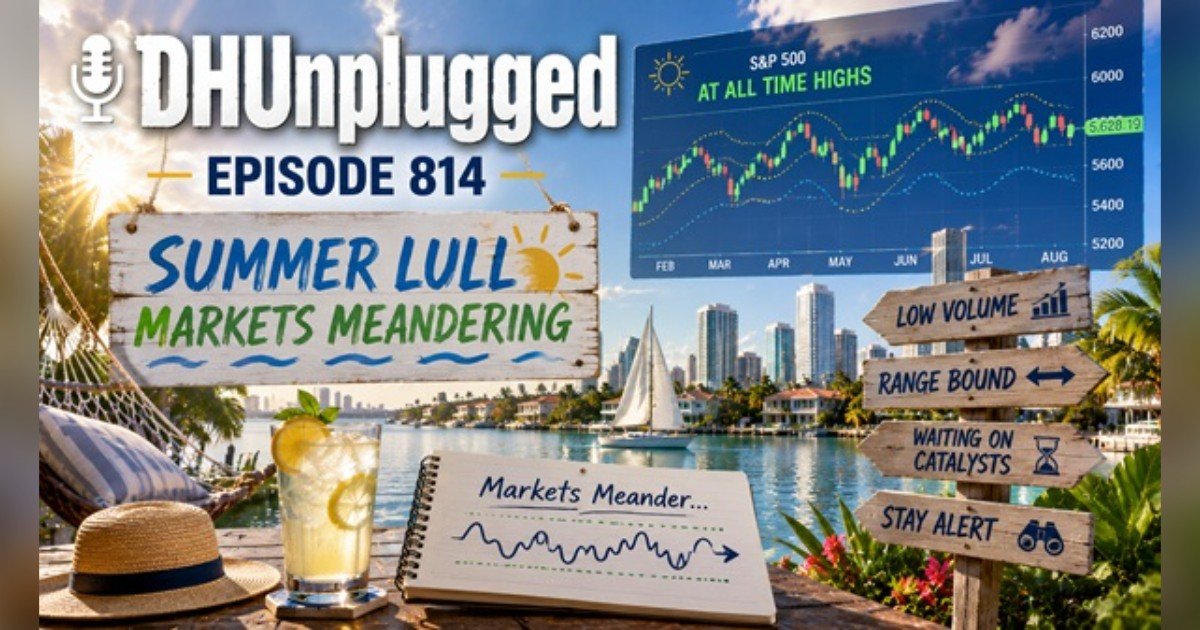
Episode 814 of DH Unplugged, titled 'The Doldrums,' tackles the dynamic landscape of market highs and potential reversals. Michael Burry's stark top call and Nvidia's innovative financing scheme are at the forefront, offering investors much to consider amid a bustling news flow.
Found this article helpful?
Share it with your network and spread the knowledge!
TLDRQuick Summary for Different Perspectives
- Gain insights on Nvidia's innovative financing and Michael Burry's market predictions from DH Unplugged's latest episode for strategic investment advantage.
- Episode 814 explores Nvidia's strategy to collateralize compute, analyzing financial implications and market dynamics with expert commentary.
- Understanding Nvidia's AI infrastructure investments could lead to technological advancements, fostering a more innovative future for industries worldwide.
- Discover how Nvidia's compute collateralization could combine 1999's enthusiasm with 2007's financialization at a greater scale.
The Doldrums: Market Highs and Strategic Moves
In the latest episode of DH Unplugged, aptly named 'The Doldrums', hosts Andrew Horowitz and John C. Dvorak dissect a market that both fascinates and frustrates investors. Released on August 18, 2026, the episode delves into a robust news cycle that challenges the notion of a summer lull. The co-hosts argue that every headline demands attention as investors grapple with the sustainability of all-time highs.
Key topics include Michael Burry's ominous warning of a potential market drop reminiscent of 1987. Burry's strategy involves shorting tech giants like Palantir, Nvidia, and Tesla via options, signaling his anticipation of a market reversal. Meanwhile, Nvidia's bold new financing strategy, involving preliminary agreements with financial titans such as Apollo and BlackRock, aims to mobilize $500 billion for AI infrastructure, reflecting a daring approach to maintaining market momentum.
Nvidia's New Frontier and Market Skepticism
Horowitz and Dvorak delve into Nvidia's innovative move to collateralize compute, transforming it into an investable asset class. This approach aims to address financier concerns by leveraging hyperscaler depreciation schedules alongside Nvidia's rapid product cycles. Jensen Huang's strategy underscores the importance of being indispensable, even at the risk of short-term profitability, potentially evoking parallels to past market exuberances.
Dvorak provides a critical lens on Nvidia's trajectory, cautioning that an unwinding could merge the enthusiasm of 1999 with the financialization of 2007, but on a much larger scale. This analysis is part of a broader discussion on bearish forecasts, with Horowitz noting that markets tend to linger near all-time highs rather than all-time lows.
Market Reactions and Financial Maneuvers
The episode also covers a spectrum of market-moving stories, from Etsy's workforce reduction paired with a $2 billion buyback to Chipotle's salmonella outbreak linked to jalapenos. Sweetgreen's Taylor Farms incident and Eli Lilly's notable sales figures for Mounjaro and Zepbound are also highlighted, illustrating the diverse challenges and triumphs within the market landscape.
Beyond individual companies, broader economic measures are discussed, such as Berkshire Hathaway's return to net-buying under Greg Abel and the newly imposed 15% tariff on polysilicon solar imports. These elements paint a complex picture of market dynamics, with implications for companies like Unusual Machines and figures like Donald Trump Jr.
As DH Unplugged continues to blend skepticism with humor, Episode 814 offers investors a rich tapestry of insights and analysis. The ongoing developments in technology, finance, and market strategies underscore the need for vigilance and adaptability in navigating the ever-evolving market landscape.
About Willard Markham
Strategic media analyst, narrative architect, and technology observer. Writes about how information flows shape markets, institutions, and public perception.