Powering Texas Data Centers: The Shift to Behind-the-Meter Solutions
 Justin McKenzie
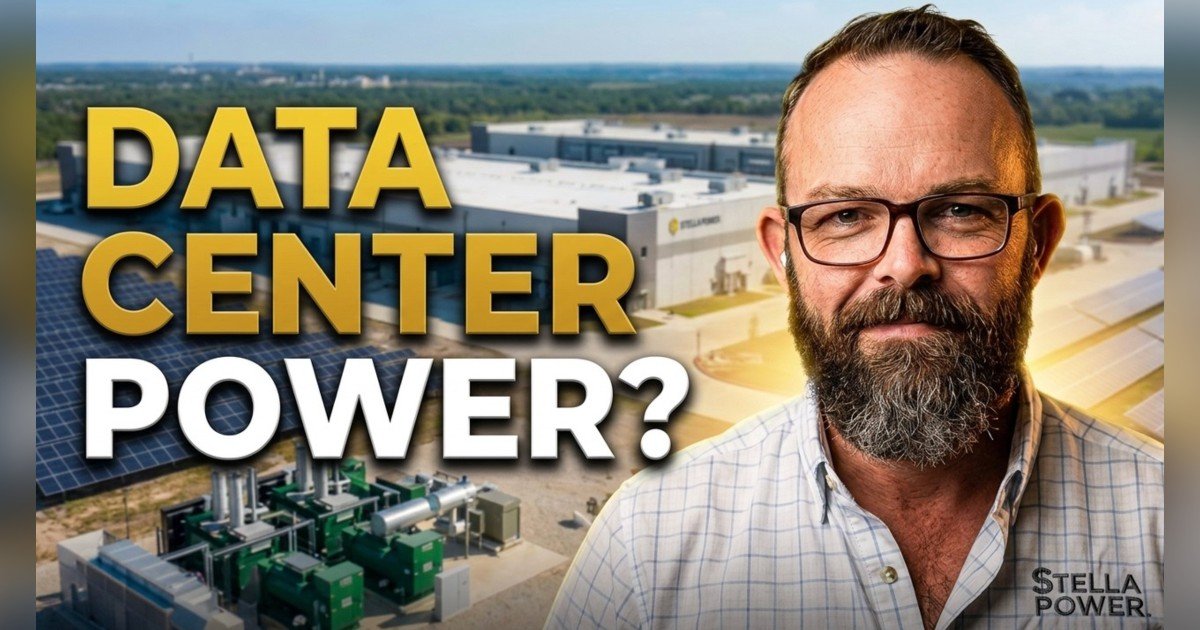
In the latest episode of The Building Texas Show, host Justin McKenzie delves into the critical issue of behind-the-meter power generation for Texas data centers. Featuring insights from Nash Whitney of Stella Power Company, the episode explores the economic and technical challenges that necessitate on-site power solutions as the state's grid faces unprecedented demand.
Found this article helpful?
Share it with your network and spread the knowledge!
TLDRQuick Summary for Different Perspectives
- Data centers using behind-the-meter power can avoid high grid costs and ensure reliable energy supply, gaining a competitive edge in Texas.
- The episode explains behind-the-meter generation, discussing technical, economic, and policy aspects of large-load power in Texas data centers.
- Behind-the-meter solutions enable data centers to operate sustainably, reducing grid dependency and contributing to energy resilience in Texas.
- Learn about Texas data centers' power challenges and innovative solutions in the latest episode of The Building Texas Show.
Understanding the Shift to On-Site Power Generation
In a recent episode of The Building Texas Show, I had the opportunity to explore the burgeoning need for behind-the-meter power solutions with Nash Whitney from Stella Power Company. As Texas grapples with a rapidly expanding grid demand, exemplified by ERCOT's projection of over 300,000 megawatts in its interconnection queue by 2032, there is an escalating urgency for data centers to develop independent power sources. Recorded in San Antonio and published on August 6, 2026, this episode dives into the intricate layers of this infrastructure debate.
Whitney and I discussed the technical, economic, and policy dimensions influencing large-load power in Texas. We addressed the distinction between power and energy, as well as kilowatts and kilowatt-hours, highlighting the importance of understanding these differences in the context of behind-the-meter generation. Whitney emphasized the necessity of this approach, stating, "Behind-the-meter power is ultimately going to be one of the only viable solutions to do that at the scale that everyone is asking it to be done."
Policy and Economic Implications
Central to our conversation was Texas Senate Bill 6 and Governor Abbott's expanded large-load rules, which now encompass both power and water. These regulations are particularly relevant as Medina County anticipates the introduction of six new data centers, underscoring the critical need for proactive power solutions. Whitney pointed out the substantial financial commitments required by utilities, which demand non-refundable deposits in the hundreds of millions for substation buildouts without guaranteed timelines. This has driven hyperscalers like Microsoft, Amazon, Meta, and Google towards on-site generation as a more reliable and economically feasible option.
Reflecting on my own experience with the crypto boom at Bandera, I concurred with Whitney's insights on the necessity for large loads to bear their own costs. Our discussion delved into Stella's operational model, which focuses on the long-term development and management of natural gas power plants, supported by Arroyo Energy Investment Partners. Whitney further elaborated on the advantages of Texas natural gas, sourced from the Marcellus and Bakken regions, as a scalable solution for on-site power generation.
The Role of Energy Market Dynamics
Our dialogue also covered the implications of Winter Storm Uri, ERCOT price signals, and the strategic use of on-site generation to mitigate real-time price spikes. Whitney invoked the philosophies of Milton Friedman and Thomas Sowell to illustrate how ERCOT's energy-only market incentivizes investment. He also noted the shared challenges faced by reshoring manufacturers and data centers alike, both contending with a constrained grid.
In discussing fuel options, Whitney credited diesel for its BTU density, which is advantageous for backup roles, but highlighted the broader potential of natural gas. As Texans navigate these energy challenges, Whitney offered a practical suggestion: download the ERCOT app to stay informed and act as responsible grid citizens.
As the host of The Building Texas Show, my goal is to shed light on the key figures and issues shaping Texas' economic landscape. This episode underscores the critical need for innovative solutions in power generation, reflecting the dynamic interplay of policy, economics, and technology. As we continue to explore these topics, I am reminded of the resilience and ingenuity that define the Lone Star State's approach to overcoming challenges.
About Justin McKenzie
Based in Boerne, Texas, Justin also hosts The Building Texas Show—a podcast spotlighting the bold minds shaping the future of the Lone Star State. When he’s not building teams or building momentum, he’s out exploring, discovering new ideas, or connecting with the people who make it all worthwhile.