Transforming Trash into Treasure: LOCOAL's Journey to Clean Energy
 David McInnis
Miles Murray, Founder of LOCOAL, shares the remarkable transformation of organic and rubber waste into clean energy on The Building Texas Show. Discover how LOCOAL's groundbreaking technology is revolutionizing waste management and contributing to a sustainable future.
Found this article helpful?
Share it with your network and spread the knowledge!
TLDRQuick Summary for Different Perspectives
- LOCOAL's technology transforms waste into clean energy and revenue, offering a competitive edge in the energy and carbon economy.
- LOCOAL's system converts organic and rubber waste into clean power and high-purity bio-carbon through thermal decomposition and gas filtration.
- This innovation helps reduce landfill use, mitigates wildfire risk by utilizing combustible biomass, and supports sustainable industrial practices.
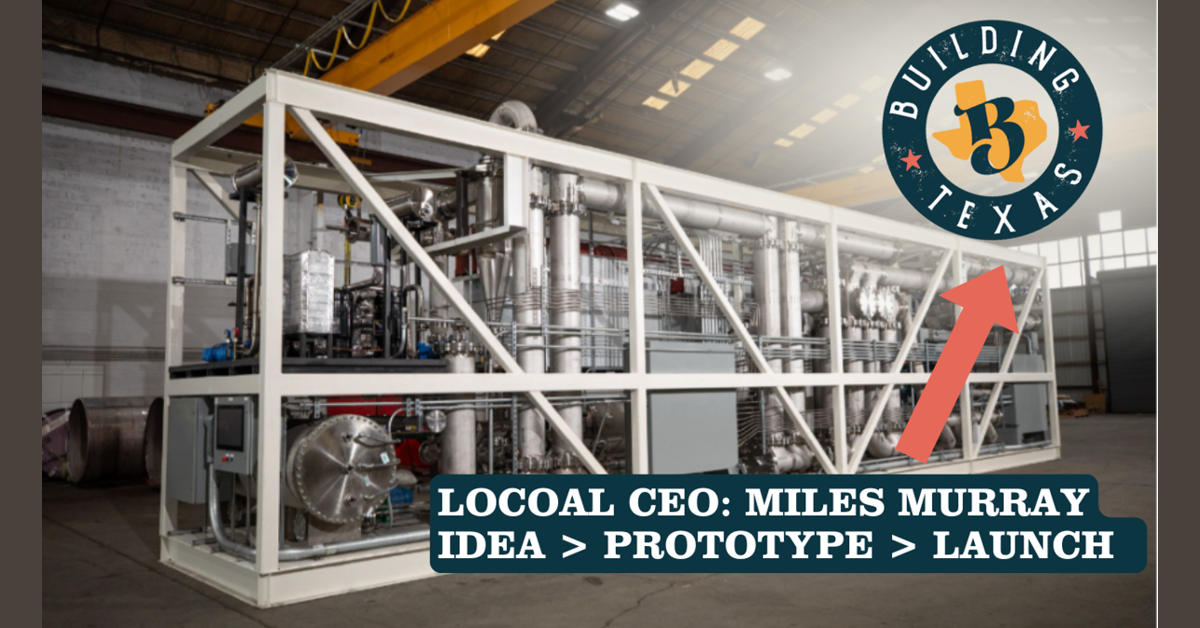
- LOCOAL's first commercial unit turns wood waste and tires into energy and carbon, marking a new era in waste-to-energy solutions.
The Evolution of LOCOAL: A Tale of Innovation and Sustainability
Imagine a world where what we once considered trash becomes the cornerstone of our energy and carbon economy. That's the vision Miles M. Murray, the Founder and CEO of LOCOAL, discussed in his latest appearance on The Building Texas Show. Hosted by entrepreneur Justin McKenzie, this episode marks a significant milestone in LOCOAL's journey, showcasing the company's transition from an idea to a fully operational leader in waste-to-energy technologies. Murray's third visit to the podcast encapsulates the essence of perseverance and innovation, highlighting LOCOAL's progression from the drawing board to commercial deployment.
Turning Waste into Wealth
LOCOAL's patented system is a marvel of engineering, designed to address the mounting problem of waste by transforming it into valuable resources. The 50-foot system, which has recently been installed just outside Houston, uses thermal decomposition, gas filtration, and bio-oil reclamation to convert wood waste, pallet tailings, storm debris, forestry byproducts, and even tires into clean energy and high-purity carbon. According to Murray, this technology not only challenges our traditional views of waste but also opens up new avenues for revenue generation. The first commercial pilot, operating at 4840 Solutions, exemplifies how LOCOAL's system can eliminate the need for landfill disposal, reducing transportation costs and producing commodities like bio-oil and sequestered carbon in the process.
A Bright Future for Clean Energy and Carbon Economy
With over $250 million in letters of intent and $50 million in strategic commitments, LOCOAL is poised for a breakout year in 2026. The company's newly issued U.S. patent secures its position as a leader in decentralized energy and carbon-negative infrastructure. LOCOAL's technology offers a solution to various environmental and industrial challenges, from wildfire risk mitigation in Texas to providing critical inputs for next-generation materials. Murray's vision of transforming waste into a vital component of the American energy landscape is becoming a reality, signaling a shift towards more sustainable and economically viable waste management practices.
For those intrigued by the intersection of innovation, sustainability, and entrepreneurship, the full episode featuring Miles Murray's insights on LOCOAL's journey is available now on The Building Texas Show. It's a compelling narrative that not only sheds light on the technological advancements in waste management but also inspires a reevaluation of how we perceive and utilize what we've long termed as 'trash.' As we look ahead, LOCOAL's pioneering work underscores the potential of clean energy and carbon economy, promising a greener, more sustainable future for all. Don't forget to visit LOCOAL for more information and to support this transformative journey towards a cleaner, energy-efficient world.
About David McInnis
David McInnis is the Founder of Newsworthy.ai, a news marketing platform that helps organizations amplify their stories and reach wider audiences. Previously, he founded PRWeb, where he transformed the newswire industry by pioneering distribution strategies in the era of Search. Today, David is once again at the forefront of innovation—this time rewriting the rules for how AI reshapes the news experience.