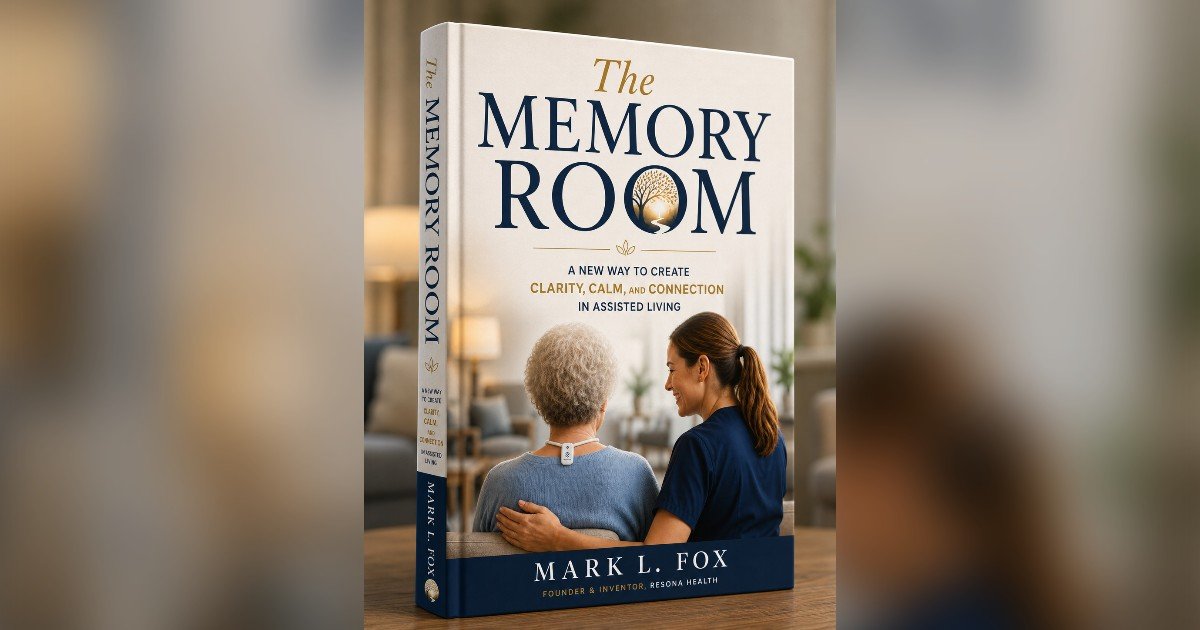
Revolutionizing Dementia Care: A New Vision for Creating More Good Days
 David McInnis
Mark L. Fox's new book, 'The Memory Room,' challenges traditional dementia care with innovative strategies that prioritize clarity and connection. By exploring non-pharmacological approaches, Fox offers hope for enhanced quality of life for those living with cognitive decline.
Found this article helpful?
Share it with your network and spread the knowledge!
TLDRQuick Summary for Different Perspectives
- The Memory Room offers a competitive edge by introducing innovative non-drug interventions for dementia care, enhancing cognitive function and family satisfaction.
- The book explores cognitive variability, 40 Hz gamma stimulation, and BlueVibe technology to improve clarity and connection in dementia patients.
- By supporting cognitive function, The Memory Room aims to enhance quality of life for dementia patients, creating more meaningful connections and communication.
- The Memory Room combines neuroscience, real-world caregiver experiences, and practical strategies for a compelling vision of future memory care.
Challenging Conventional Dementia Care
In a world where over 55 million people live with dementia, families and caregivers often find themselves grappling with the limitations of traditional care approaches. Many have resigned to the notion that little can be done beyond managing symptoms. However, Mark L. Fox, the founder of Resona Health and a former aerospace engineer, presents a groundbreaking perspective in his new book, The Memory Room: A New Way to Create Clarity, Calm, and Connection in Assisted Living. The book delves into the science of cognitive variability, 40 Hz gamma stimulation, and emerging non-pharmacological interventions that promise to enhance the lives of individuals with dementia.
The Science Behind the Breakthrough
Fox’s insights are rooted in decades of engineering experience and are backed by research from MIT's Picower Institute for Learning and Memory. His book argues that the 'good days' often observed in memory care settings are not merely serendipitous. Instead, these are moments of clarity and connection that could be systematically encouraged through careful scientific intervention. At the heart of this exploration is BlueVibe, a wearable device developed by Resona Health. BlueVibe combines pulsed electromagnetic field (PEMF) technology with pulsed blue light stimulation at 40 Hz, a frequency that, according to international studies, may positively influence brain health by activating biological processes like microglial activation and neural network coordination.
Transformative Impacts and Future Possibilities
The book presents compelling results from a six-week Phase 1 study, involving 41 participants, where all participants showed improvement in cognitive function scores without any adverse effects. Such findings underscore the potential of non-invasive methods in enhancing the quality of life for those living with dementia. Yet, Fox emphasizes that this is not a cure for Alzheimer's or dementia, but rather a means to tap into the brain's remaining capacities, fostering more opportunities for connection and communication.
Written for a broad audience including assisted living operators, healthcare professionals, and families, The Memory Room offers practical, evidence-based approaches to cognitive support. It addresses the challenges of implementing these innovations in senior living environments, while also considering caregiver burnout and family satisfaction. As early readers have noted, the book marries neuroscience with real-world applications, crafting a vision for the future of memory care.
As the demand for innovative memory care solutions continues to grow, The Memory Room stands as a beacon of hope and progress. It invites us to reimagine what is possible for those living with cognitive decline, shifting the focus from mere symptom management to active engagement and connection. For those interested in exploring this new paradigm in dementia care, the book is available on Amazon: https://www.amazon.com/dp/B0H4XQHTV9.
About David McInnis
David McInnis is the Founder of Newsworthy.ai, a news marketing platform that helps organizations amplify their stories and reach wider audiences. Previously, he founded PRWeb, where he transformed the newswire industry by pioneering distribution strategies in the era of Search. Today, David is once again at the forefront of innovation—this time rewriting the rules for how AI reshapes the news experience.