Navigating the Power Dilemma: Texas Data Centers and the Grid Challenge
 David McInnis
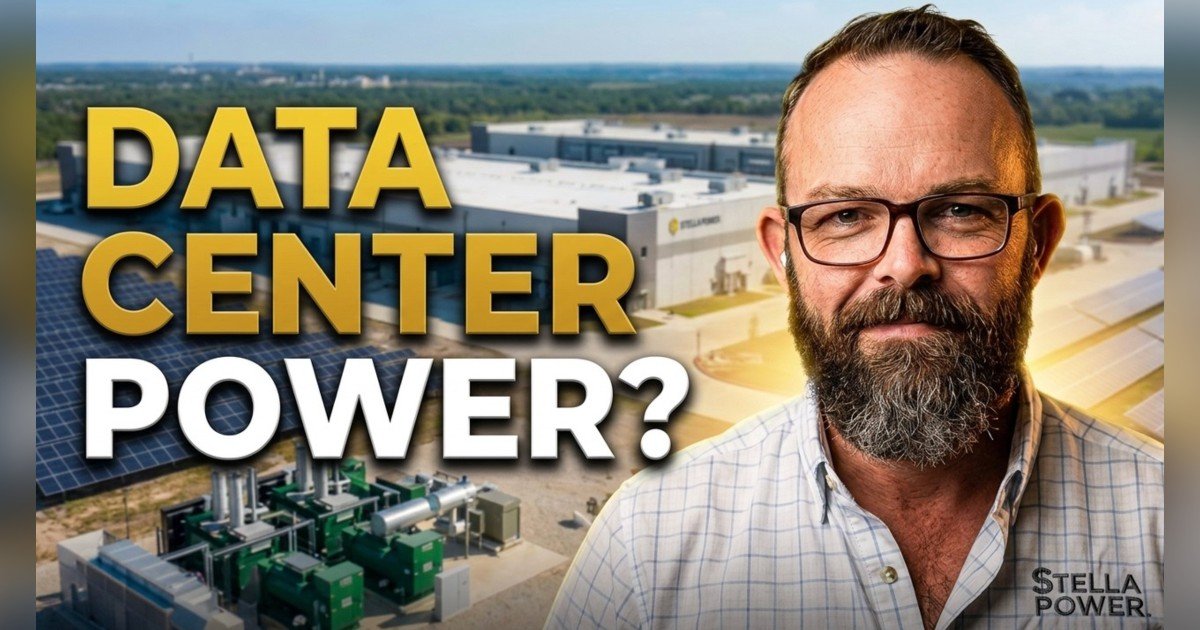
In a compelling episode of The Building Texas Show, host Justin McKenzie and Nash Whitney of Stella Power Company explore the essential shift towards behind-the-meter power for data centers in Texas. As the state's grid faces unprecedented demands, this conversation unveils the technical and policy changes reshaping the power landscape.
Found this article helpful?
Share it with your network and spread the knowledge!
TLDRQuick Summary for Different Perspectives
- Data centers can gain independence and cost savings by building behind-the-meter power solutions, avoiding costly utility deposits and grid constraints.
- Behind-the-meter generation involves on-site power plants, reducing reliance on the grid, with Stella Power using natural gas and backup generators.
- This approach can ensure reliable power for data centers, supporting technological growth and resilience in Texas communities.
- ERCOT's energy-only market incentivizes on-site generation with price signals, highlighting Texas' complex energy landscape.
Understanding the Shift to Behind-the-Meter Power
In a state renowned for its energy prowess, Texas faces a critical juncture as its data centers grapple with the challenge of power sustainability. The latest episode of The Building Texas Show, hosted by Justin McKenzie, delves into this pressing issue with Nash Whitney of Stella Power Company. The episode, recorded in San Antonio, meticulously examines the intricacies of behind-the-meter generation, highlighting its increasing necessity in light of ERCOT's report projecting more than 300,000 megawatts in its interconnection queue by 2032. This figure starkly contrasts with the current grid's 85-gigawatt peak load, underscoring the urgency of the situation.
The conversation takes place against the backdrop of Medina County residents preparing for six new data centers, emphasizing the need for innovative power solutions. McKenzie and Whitney dissect the technical, economic, and policy dimensions influencing large-load power in Texas, offering listeners a comprehensive understanding of the challenges and opportunities at hand.
Policy Implications and Economic Realities
The discussion ventures into the legislative and economic framework steering the power sector, particularly focusing on Texas Senate Bill 6 and Governor Abbott's expanded large-load regulations. These policies, addressing both power and water, are pivotal as hyperscalers like Microsoft, Amazon, Meta, and Google navigate the evolving landscape. Whitney articulates the scale problem succinctly, asserting that behind-the-meter power emerges as one of the few viable solutions to meet the escalating demands.
Utilities nationwide are now requiring non-refundable deposits in the hundreds of millions for substation buildouts, often without a committed schedule, prompting hyperscalers towards on-site generation. McKenzie's insights, drawn from his utility experience at Bandera, highlight the financial burdens large loads must shoulder, resonating with Whitney's emphasis on carrying one's costs.
Fuel Choices and Market Signals
Fuel sources and market signals play a crucial role in shaping the power strategies of data centers. Whitney's analysis credits diesel's BTU density for backup roles but positions Texas natural gas from the Marcellus and Bakken as the scalable solution. The conversation reflects on Winter Storm Uri and the ERCOT price signals, elucidating the strategic advantage of on-site generation as a hedge against real-time price spikes.
Whitney's invocation of economists Milton Friedman and Thomas Sowell serves to explain how ERCOT's energy-only market sends investment signals, affecting reshoring manufacturers facing similar grid constraints. His practical advice for Texans—download the ERCOT app and practice good grid citizenship—captures the essence of community responsibility in navigating these complex power dynamics.
As the dialogue unfolds, it becomes evident that the challenges faced by Texas data centers are emblematic of broader trends in energy sustainability and infrastructure adaptation. The episode of The Building Texas Show offers not just a window into the current state of affairs but also a blueprint for future resilience in one of America's most dynamic energy landscapes.
About David McInnis
David McInnis is the Founder of Newsworthy.ai, a news marketing platform that helps organizations amplify their stories and reach wider audiences. Previously, he founded PRWeb, where he transformed the newswire industry by pioneering distribution strategies in the era of Search. Today, David is once again at the forefront of innovation—this time rewriting the rules for how AI reshapes the news experience.