Human Cognition: The Bridge Between AI and Industrial STEM
 David McInnis
AI serves as a transformative tool in industrial settings, but its effectiveness hinges on human cognition and Industrial STEM education. As technology advances, the integration of technical knowledge with industrial practice becomes crucial for harnessing AI's full potential.
Found this article helpful?
Share it with your network and spread the knowledge!
TLDRQuick Summary for Different Perspectives
- Industrial STEM education provides a competitive edge by empowering professionals to harness AI effectively for emerging industries.
- AI tools process data swiftly, but require human expertise to interpret context and apply insights in industrial environments.
- Industrial STEM education fosters leaders who integrate technology and human cognition, enhancing industry collaboration and societal progress.
- AI and human cognition together transform industrial environments, emphasizing the irreplaceable role of human expertise in technology use.
AI as a Tool, Not a Workforce Replacement
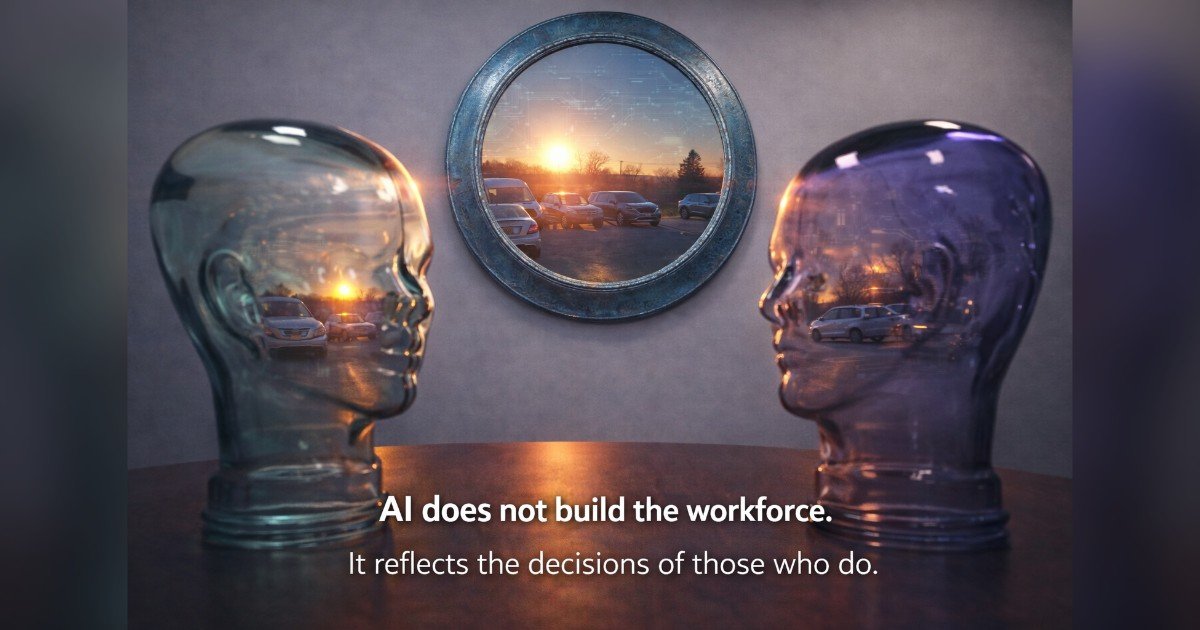
The narrative surrounding artificial intelligence often evokes concerns about job displacement and the potential for machines to surpass human capabilities. However, this perspective overlooks a crucial aspect: AI is not a substitute for the industrial workforce. Rather, it is a tool whose true value is unlocked through human cognition, contextual judgment, and domain-specific expertise. This is particularly evident in the realm of Industrial STEM education, which equips leaders and skilled professionals to interpret data, apply technology effectively, and construct workforce pipelines for emerging industries.
Industrial STEM is more than a mere buzzword; it encompasses the science, application, and mechanics unique to specific industrial sectors. While advancements in technology have revolutionized data measurement and analysis, the bridge between potential and performance remains firmly rooted in human cognitive thought. AI can process data at remarkable speeds, yet it lacks the intrinsic understanding of context that only human guidance can provide.
The Essential Role of Industrial STEM Education
To truly grasp the significance of Industrial STEM, consider the everyday scenario of automotive tire lifespan. While technological advancements now allow for real-time monitoring of tire conditions through sensors and onboard diagnostics, these tools do not eliminate the need for human interpretation. Without the contextual understanding of factors such as driving conditions and environmental influences, data alone remains incomplete.
This underscores the importance of Industrial STEM education, which integrates technical knowledge with applied industrial practice. It transforms theoretical understanding into practical application, enabling professionals to discern the implications of data within a manufacturing environment. The effectiveness of AI in industrial settings is directly linked to the ability of humans to translate industrial science into actionable insights, thereby amplifying rather than replacing industrial knowledge.
Leadership and Human-Centered Industrial Intelligence
The evolution of measurement and decision-making in industrial sectors has ushered in a new era of predictive and preventive models. These advancements allow industries to anticipate challenges before they materialize, shifting from reactive to predictive approaches. However, the value of these predictions lies in human interpretation and decision-making. Leaders in industrial environments must possess not only technical expertise but also the ability to navigate the human systems surrounding AI.
This emerging necessity for interpretive leadership highlights the ongoing need for professionals who can critically assess AI-driven insights within the context of safety regulations, production deadlines, and workforce capabilities. The future of industry will be defined by a collaborative relationship between human cognition and intelligent tools, where AI enhances craftsmanship rather than replacing it.
Ultimately, the narrative that AI will replace human workers oversimplifies the complexity of technological transformation. Instead, history demonstrates that advancements in technology often transform the nature of work, creating new demands for skills and leadership. The real risk lies not in AI replacing humans, but in failing to adequately prepare humans to leverage AI effectively. As Dr. Andrew Johnson III emphasizes, the future workforce requires individuals who can think critically within industrial environments, making the most of every tool available. Thus, Industrial STEM education becomes indispensable, ensuring that progress continues to be driven by human insight and innovation.
About David McInnis
David McInnis is the Founder of Newsworthy.ai, a news marketing platform that helps organizations amplify their stories and reach wider audiences. Previously, he founded PRWeb, where he transformed the newswire industry by pioneering distribution strategies in the era of Search. Today, David is once again at the forefront of innovation—this time rewriting the rules for how AI reshapes the news experience.