Rising Concerns in Patagonia: Antimony Levels at South32 Hermosa Mine Approach Regulatory Limits
 Mark Willaman
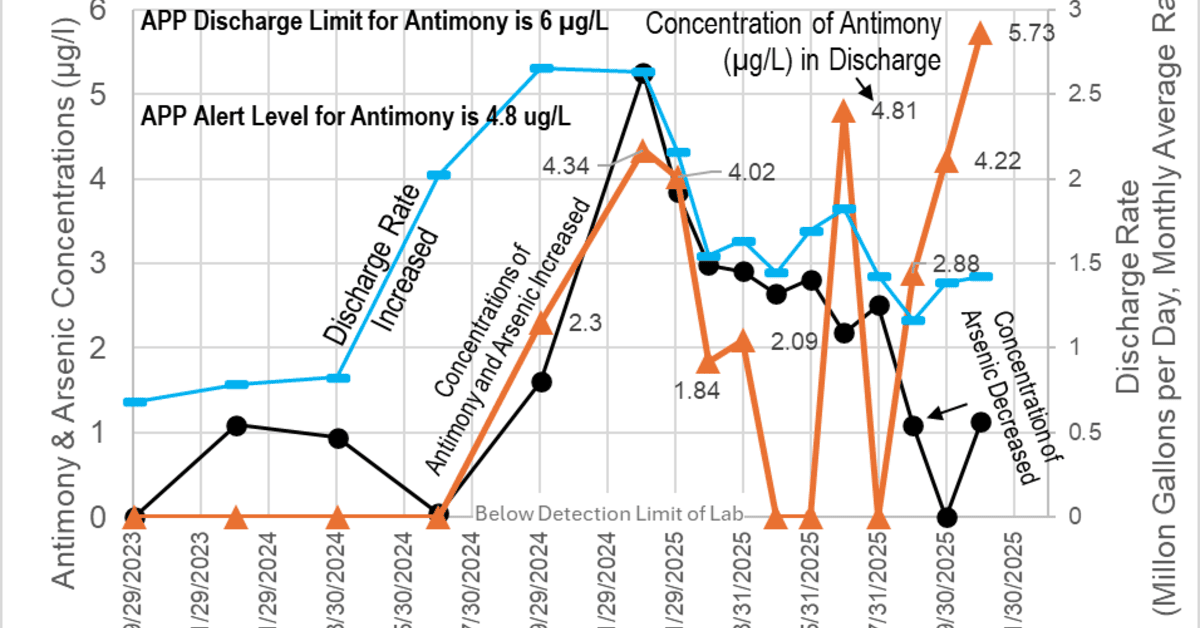
Recent water quality samples from the South32 Hermosa Mine near Patagonia, Arizona, have shown antimony concentrations exceeding state Alert Levels and nearing regulatory discharge limits. This development raises significant concerns about water quality trends and the mine's impact on community health and the environment.
Found this article helpful?
Share it with your network and spread the knowledge!
TLDRQuick Summary for Different Perspectives
- Understanding the antimony discharge issue at South32 Hermosa Mine could provide leverage in advocating for stricter environmental regulations and safeguards.
- The South32 Hermosa Mine's water discharge contains antimony levels exceeding state alert levels, indicating a trend of increasing pollution with higher flow rates.
- Increased transparency and monitoring of water quality near the South32 Hermosa Mine can protect community health and the environment from toxic mining byproducts.
- Antimony, a toxic byproduct found in the mine's discharge, can cause serious health issues like stomach cancer and liver damage if chronically exposed.
Water Quality at Risk
In a concerning development for the residents of Patagonia, Arizona, a water quality sample from the South32 Hermosa Mine has reported the highest concentration of antimony to date, exceeding the state’s Alert Level. The sample, collected on October 31, 2025, contained 5.73 micrograms per liter (µg/L) of antimony, surpassing Arizona’s Aquifer Protection Permit (APP) Alert Level of 4.8 µg/L and approaching the APP discharge limit of 6 µg/L. This finding not only triggers a mandatory 30-day study due to the exceeded Alert Level but also highlights a troubling upward trend in antimony concentrations in the mine’s discharge as flow rates increase.
These developments are alarming for the local community and environmental advocates, as antimony is a toxic byproduct of mining that poses severe health risks. According to the U.S. Environmental Protection Agency (EPA), chronic exposure to antimony through drinking water can lead to a host of health issues, including gastrointestinal, respiratory problems, and even cancer. The community’s concerns are further compounded by the fact that there is a significant lag—30 to 60 days—in reporting these findings to the public, raising fears that current concentrations could exceed the regulatory discharge limit.
Community and Environmental Impacts
The reported increase in antimony levels is not the only concern for the residents of Patagonia and the surrounding areas. The discharge from the mine into Harshaw Creek poses potential risks to the groundwater, which is the sole water source for the town of Patagonia. This area, already recognized for its high mineralization and presence of abandoned mines, is at risk of further contamination. The local community, supported by organizations like the Calabasas Alliance, is particularly worried about the long-term impacts on water quality and quantity, especially given the mine’s plans to pump millions of gallons of groundwater daily for its operations.
Robin Lucky, President of the Calabasas Alliance, emphasizes the importance of Harshaw Creek as a lifeline for drinking water, irrigation, and wildlife in Santa Cruz County. With the region already facing drought conditions, unchecked discharges from South32’s operations could exacerbate the situation, leading to bioaccumulation of toxic metals in wells, lakes, and the Santa Cruz Active Management Area.
Public Calls for Transparency and Accountability
The situation at the South32 Hermosa Mine has underscored the need for greater transparency and accountability from both the mining company and regulatory bodies. The delay in public reporting and potential deficiencies in the mine’s water treatment plant have sparked calls for immediate action to protect the community’s health and the environment. Chris Gardner, a hydrologist and scientific advisor to local residents, points out the urgency of environmental monitoring by the public to better understand, respond to, and hold the mine and regulators accountable for these issues.
The residents of Patagonia and environmental advocates are not just fighting for their current well-being but are also looking ahead to prevent long-term damage to their water resources. As Robin Lucky poignantly states, water is central to the health, prosperity, and survival of their community, making transparency in reporting and effective water treatment not just a regulatory requirement but a crucial element of trust-building in the community.
In light of these developments, the community’s vigilance and the work of organizations like the Calabasas Alliance are more important than ever. These efforts aim not only to ensure that current levels of toxic metals are addressed but also to safeguard the region’s water resources for future generations. As this situation unfolds, the community’s resolve to demand accountability and protect their environmental heritage remains unwavering.
About Mark Willaman
Mark Willaman is a media-tech entrepreneur and marketing strategist with decades of experience in the newswire and communications industry. After starting his career at Johnson & Johnson, he founded HRmarketer, Fisher Vista, SocialEars, and Advos.io, and later co-founded Newsworthy, NewsRamp, Newswriter, and Burstable.news. Mark has pioneered new ways to transform and amplify press releases—shifting the focus from vanity metrics to measurable ROI, engagement, and discoverability. A strong supporter of independent media and reporting, he builds platforms that help organizations share their stories freely, without corporate and media gatekeepers.