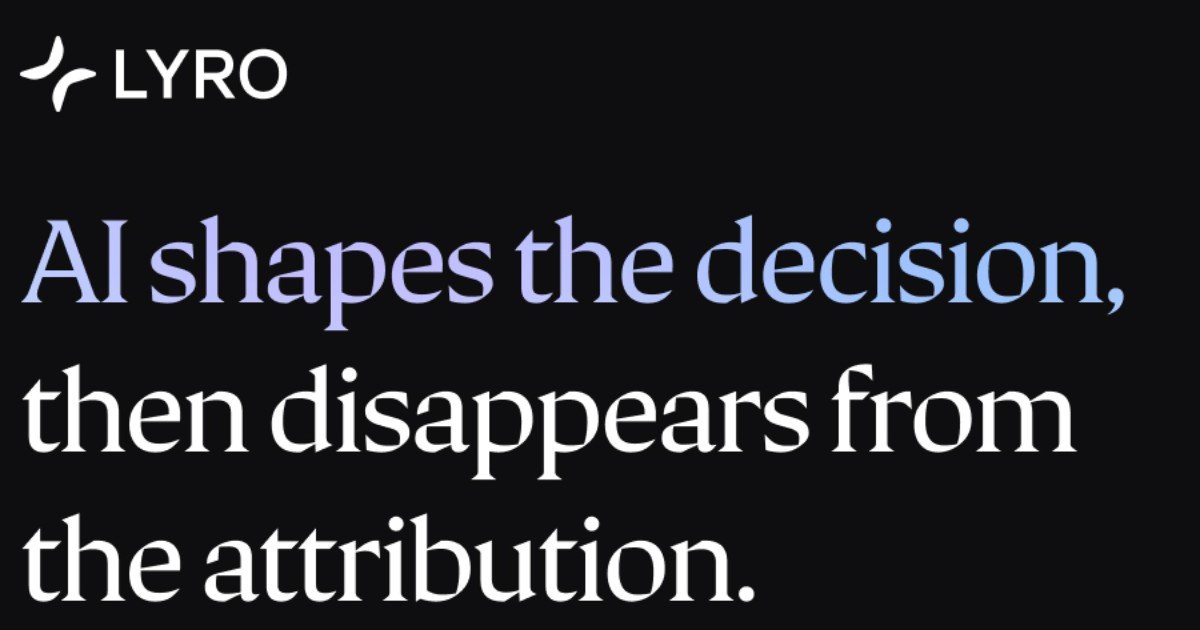
The Invisible Hand of AI: How It Shapes Consumer Decisions Yet Remains Unseen
 David McInnis
A new report from Tidio reveals the paradox of AI's growing influence on purchase decisions despite being largely uncredited in web traffic analytics. As AI's role in e-commerce expands, marketers must adapt to a landscape where traditional attribution models fall short.
Found this article helpful?
Share it with your network and spread the knowledge!
TLDRQuick Summary for Different Perspectives
- Understanding AI's hidden influence can give businesses a competitive edge in optimizing marketing strategies and capturing a larger share of e-commerce revenue.
- AI influences purchases without receiving attribution due to direct navigation. This creates a gap in traditional attribution models, termed 'dark AI'.
- AI's role in e-commerce is transforming consumer interactions, potentially boosting economic growth by enhancing purchase decision-making processes.
- AI platforms are shaping e-commerce by influencing consumer choices, despite not being visible in standard web traffic analytics.
AI's Stealth Influence on Consumer Purchases
According to a groundbreaking report by Tidio, AI is silently shaping consumer purchase decisions on an unprecedented scale. While McKinsey highlights that half of consumers now rely on AI for product research, Contentsquare's analysis reveals that AI-referred sessions account for a mere 0.2% of total web visits. This discrepancy is the focal point of Tidio's latest research, AI in E-Commerce in 2026: The New Shopping Funnel.
The mechanism behind this 'dark AI' phenomenon is straightforward yet impactful. Consumers use AI assistants for product recommendations, which leads them to open new browser tabs or conduct branded searches, bypassing direct traffic tags for AI. This analytical invisibility poses a significant challenge for marketers, who must recognize the real yet unseen influence AI wields over consumer behavior.
Revolutionizing Conversion Rates and Attribution Models
Despite the low attribution of AI in web analytics, the conversion data paints a different picture. Similarweb's analysis of U.S. retail data shows ChatGPT-referred sessions boast an impressive 11.4% conversion rate, outpacing direct and paid search traffic. This suggests that the fraction of AI-tagged referrals represents a high-intent segment within a much larger pool of AI-influenced journeys.
As AI platforms like ChatGPT consume more content and generate fewer outbound clicks, evidenced by TollBit's findings of declining click-through rates, brands relying on last-click attribution are optimizing for a misrepresented demand driver. The financial stakes are high, with McKinsey projecting $750 billion in U.S. revenue driven by AI-powered search by 2028. Brands that remain unprepared risk losing a significant portion of their traditional search traffic.
The Emerging Protocol Infrastructure and Consumer Readiness
To formalize AI's role in transactions, a robust protocol infrastructure is emerging. Google's Universal Commerce Protocol, OpenAI's Agentic Commerce Protocol, and Visa's Trusted Agent Protocol are setting the stage for AI agents to seamlessly complete purchases. This standardized approach is crucial as consumer acceptance grows rapidly. Omnisend's research shows that consumer reluctance to allow AI to finalize transactions dropped dramatically from 66% to 32% within five months in 2025.
In this evolving landscape, marketers must adapt their strategies to address the unseen yet significant impact of AI. As Tytus Gołas, Founder and CEO of Tidio, emphasizes, the challenge lies in managing the various inputs that determine AI visibility across organizational teams. With AI on the verge of influencing a substantial portion of e-commerce spending, the path forward requires embracing the unseen dynamics of the digital marketplace.
For those eager to delve deeper into the implications of AI in e-commerce, the full Tidio report is available for download at https://www.getlyro.ai/reports/ai-in-ecommerce. As businesses strive to stay ahead, understanding and leveraging the 'dark AI' influence could be the key to thriving in the new era of digital commerce.
About David McInnis
David McInnis is the Founder of Newsworthy.ai, a news marketing platform that helps organizations amplify their stories and reach wider audiences. Previously, he founded PRWeb, where he transformed the newswire industry by pioneering distribution strategies in the era of Search. Today, David is once again at the forefront of innovation—this time rewriting the rules for how AI reshapes the news experience.