Rural Texas Faces the Uncertain Future of 'Intelligence Farming' in 2027
 David McInnis
As 2027 approaches, rural Texas communities may find themselves unprepared for the impending 'intelligence farming' revolution. The latest episode of The Building Texas Show explores the implications of AI in these areas, highlighting the challenges and opportunities ahead.
Found this article helpful?
Share it with your network and spread the knowledge!
TLDRQuick Summary for Different Perspectives
- Rural Texas leaders can leverage AI for competitive advantage in economic development, optimizing both revenue and risk as the AI economy grows.
- AI synthesizes public records and constituent signals, helping rural Texas towns prepare for 'intelligence farming' by enhancing decision-making and resource allocation.
- AI democratizes access to strategic tools for under-resourced communities, aiding volunteer mayors in bridging the gap with larger, wealthier areas.
- The Building Texas Show reveals how AI transforms rural governance, emphasizing the importance of regional collaboration and innovative strategies for future readiness.
Unveiling the Challenges of 'Intelligence Farming' in Rural Texas
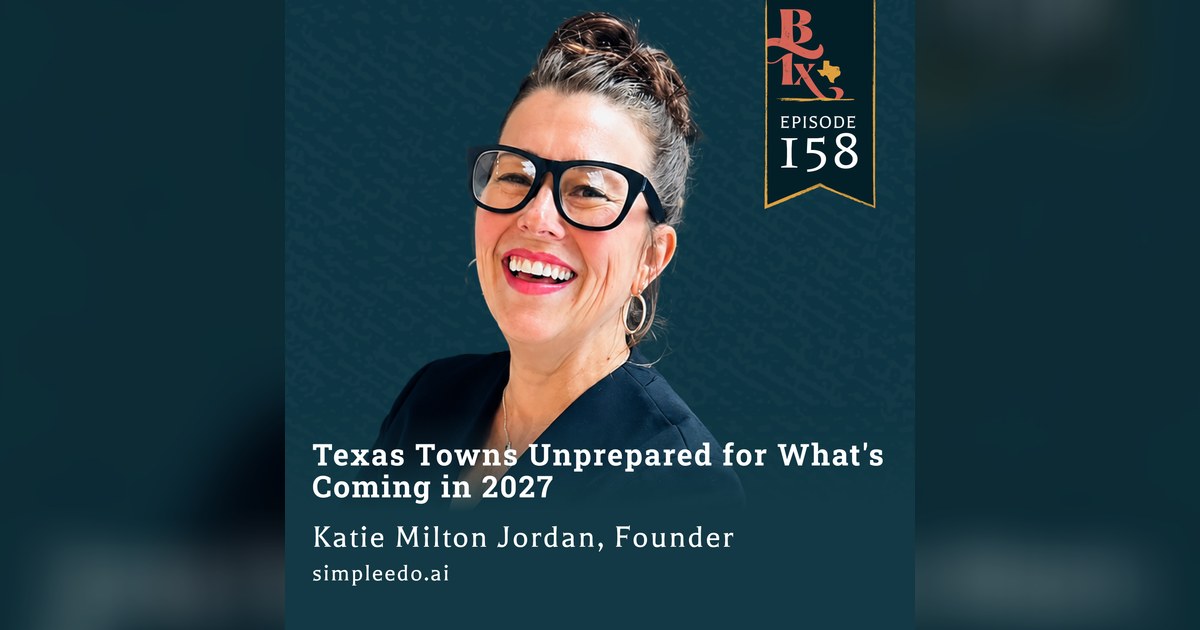
The most recent episode of The Building Texas Show delves into a pressing concern for rural Texas: the readiness of these communities for the 2027 'intelligence farming' wave. Hosted by Justin McKenzie, the episode features a conversation with Katie Milton-Jordan, founder and CEO of SimpleEDO.ai, who highlights the imminent transformation driven by artificial intelligence. The dialogue underscores the potential vulnerabilities of rural Texas communities, which, like much of rural America, may lack the necessary preparation to navigate this technological shift.
The discussion reveals several key areas of concern. Volunteer mayors and lean city councils often lag behind in visibility compared to site selectors, who have access to comprehensive tools and research. This disparity raises questions about the readiness of local governments to meet the demands of this new era. Milton-Jordan emphasizes the importance of optimizing for both revenue and risk, as the AI economy integrates more deeply into public-sector workflows.
Bridging the Information Gap with AI
A significant aspect of the conversation revolves around the information gap between site selectors and civic leaders. Milton-Jordan points out that while site selectors arrive equipped with robust resources, civic leaders often operate without such advantages. The episode suggests a practical solution: employing AI to synthesize years of public records, surveys, and board meetings to uncover historical constituent signals. Such an approach could empower local governments to make informed decisions and better prepare for the challenges of 'intelligence farming.'
Moreover, the episode touches on the issue of 'tribal knowledge' within municipalities and small economic development organizations (EDOs). This term refers to the unwritten, informal knowledge held by individuals within these organizations, which can hinder progress when not effectively captured and shared. By leveraging AI, rural communities could overcome this barrier, democratizing access to information and enabling more strategic decision-making.
Regional Collaboration and Future Prospects
The discussion also highlights the potential for regional collaboration across the Texas Hill Country as a means to overcome traditional county-line silos. This collaborative approach could foster innovation and resource-sharing, essential components for thriving in the AI-driven future. The conversation previews the upcoming Hill Country Venture Fest, scheduled for October 1 through thetownie.ai, and reflects on past successes such as Miles Murray, a Tyvee graduate spotlighted for his work in energy and biofuels.
In a broader context, Milton-Jordan frames AI as a leveling force, offering under-resourced communities access to strategies previously reserved for more affluent areas. This democratization of AI tools represents an opportunity for rural Texas to harness the power of technology to drive economic development and innovation.
As the conversation on The Building Texas Show reveals, the path to preparing rural Texas for the 'intelligence farming' wave is fraught with challenges yet brimming with potential. By embracing AI and fostering regional collaboration, these communities can position themselves to not only survive but thrive in the coming years.
About David McInnis
David McInnis is the Founder of Newsworthy.ai, a news marketing platform that helps organizations amplify their stories and reach wider audiences. Previously, he founded PRWeb, where he transformed the newswire industry by pioneering distribution strategies in the era of Search. Today, David is once again at the forefront of innovation—this time rewriting the rules for how AI reshapes the news experience.